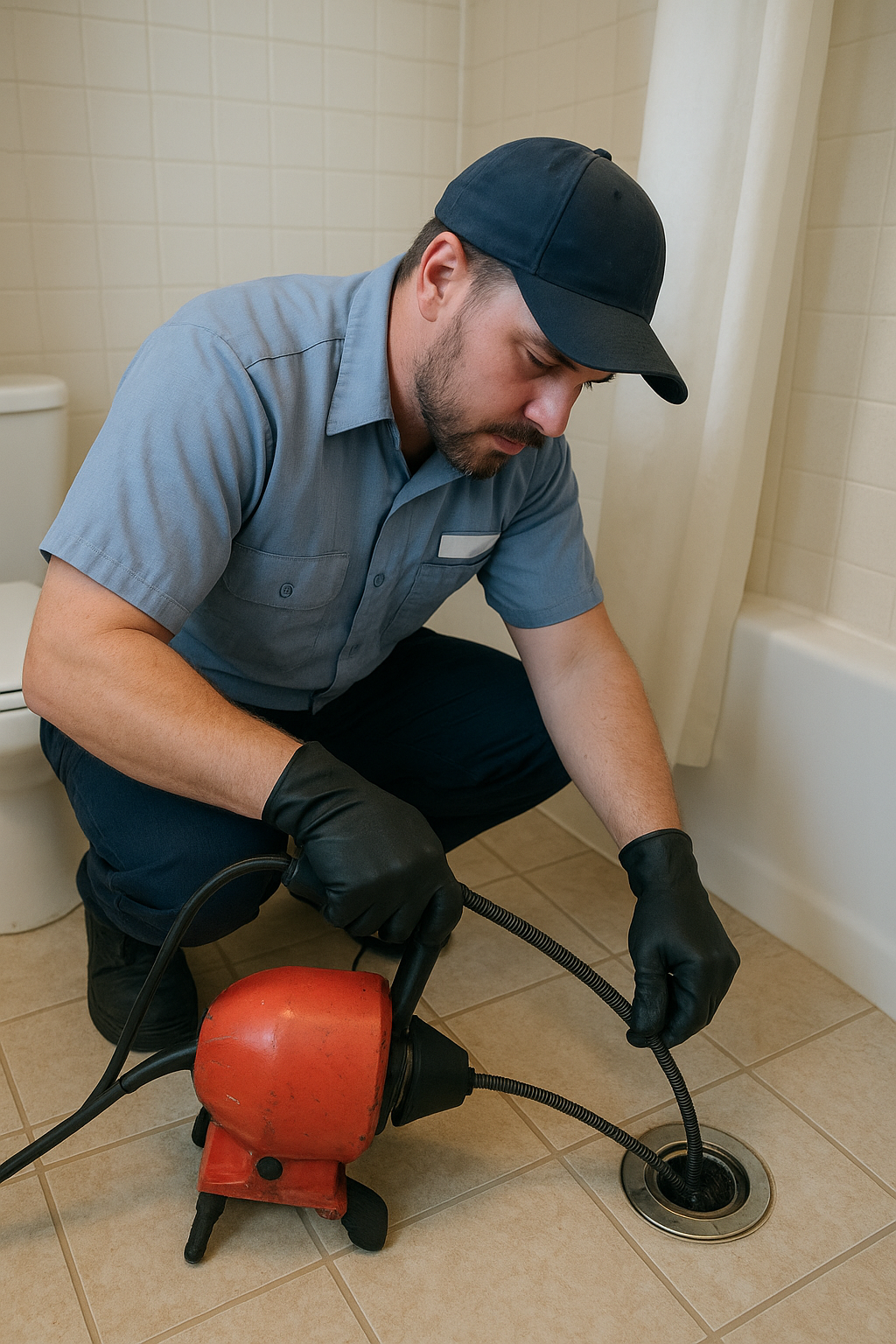
Houston’s subtropical climate brings high humidity year-round that promotes soap scum and hair buildup inside bathroom pipes faster than in drier regions. In neighborhoods such as the Heights and Montrose, many homes built before 1970 still have cast-iron or galvanized lines that corrode from the inside, narrowing the diameter and trapping debris. When heavy rains hit Harris County, the added groundwater pressure can push roots through small cracks, turning a slow drain into a full backup within hours.
Bathroom fixtures connect to smaller-diameter branches than kitchen lines, so even modest obstructions create noticeable problems quickly. Technicians often find multiple partial blockages stacked along the run rather than one solid clog, especially in Midtown and Downtown condos where shared stacks serve several units. Using a 3/8-inch cable with a cutting head sized for 1-1/2-inch and 2-inch pipes prevents damage to older fittings while restoring flow without excavation in most cases.
Homeowners sometimes attempt chemical cleaners first, which can worsen corrosion in vintage lines common to River Oaks and nearby streets. A camera inspection after clearing reveals whether the pipe wall is still sound or needs spot repair before another rain event. Service calls in nearby cities like Katy or Sugar Land follow the same pattern once the home’s age and soil conditions are factored in.
Technician insight
In Houston the thing that catches most people out with bathroom drain cleaning is how quickly our heavy rains push groundwater into the clay soil around older Heights and Montrose homes, forcing roots into already narrowed cast-iron lines that never fully dry out between storms.
Recurring Shower Backup in Montrose
A homeowner in a 1960s Montrose house reported the shower backing up after every rain. Camera revealed roots at a cracked joint 18 feet from the cleanout. A 3/8-inch cable with root cutter cleared the line and restored flow; the owner was advised to schedule annual maintenance before the next wet season.
Bathroom Drain Cleaning Services We Offer
✓Shower Drain Unclogging
Removes hair and soap buildup from shower drains common in older Heights and Montrose homes before it reaches the main line.
✓Bathtub Drain Cleaning
Clears slow-draining tubs caused by combined hair, scum, and pipe scale in humid Houston bathrooms.
✓Sink Drain Unclogging
Targets vanity and pedestal sink clogs that form quickly in Midtown and Downtown properties with narrow trap arms.
✓Toilet Drain Cleaning
Addresses recurring toilet clogs from aging wax rings and root intrusion in River Oaks and surrounding older neighborhoods.
✓Bathroom Floor Drain Service
Opens floor drains in bathrooms that collect debris during heavy Harris County rains and prevent water from backing up into living spaces.
Bathroom Drain Cleaning Cost in Texas
| Service | Typical Range | What Affects It |
|---|---|---|
| Single fixture drain clearing | $175–$325 | Typical for accessible shower or sink in homes with standard cleanouts. |
| Multiple bathroom fixture service | $275–$475 | When clog affects tub, shower, and toilet on the same branch. |
| Root cutting add-on | $150–$250 | Required when camera shows intrusion common in clay-soil yards. |
| Camera inspection only | $125–$200 | Stand-alone when homeowner wants to check pipe condition before other work. |
Ranges are typical for Texas and confirmed with an exact written quote before any work starts.
How it works
- 1
On-Site Assessment
Technician checks each bathroom fixture and listens for gurgling in adjacent lines to map the likely blockage location.
- 2
Camera Inspection
A small camera is run through the cleanout or fixture to confirm the clog type and pipe condition before any cable work begins.
- 3
Mechanical Clearing
Appropriate cable size and head are used to cut through hair, roots, or scale without damaging older cast-iron sections.
- 4
Flow Test and Cleanup
All fixtures are run simultaneously to verify full flow, then the work area is left clean.
Pricing
Cost depends on number of fixtures affected, depth of access point, and whether roots or collapsed pipe are found.