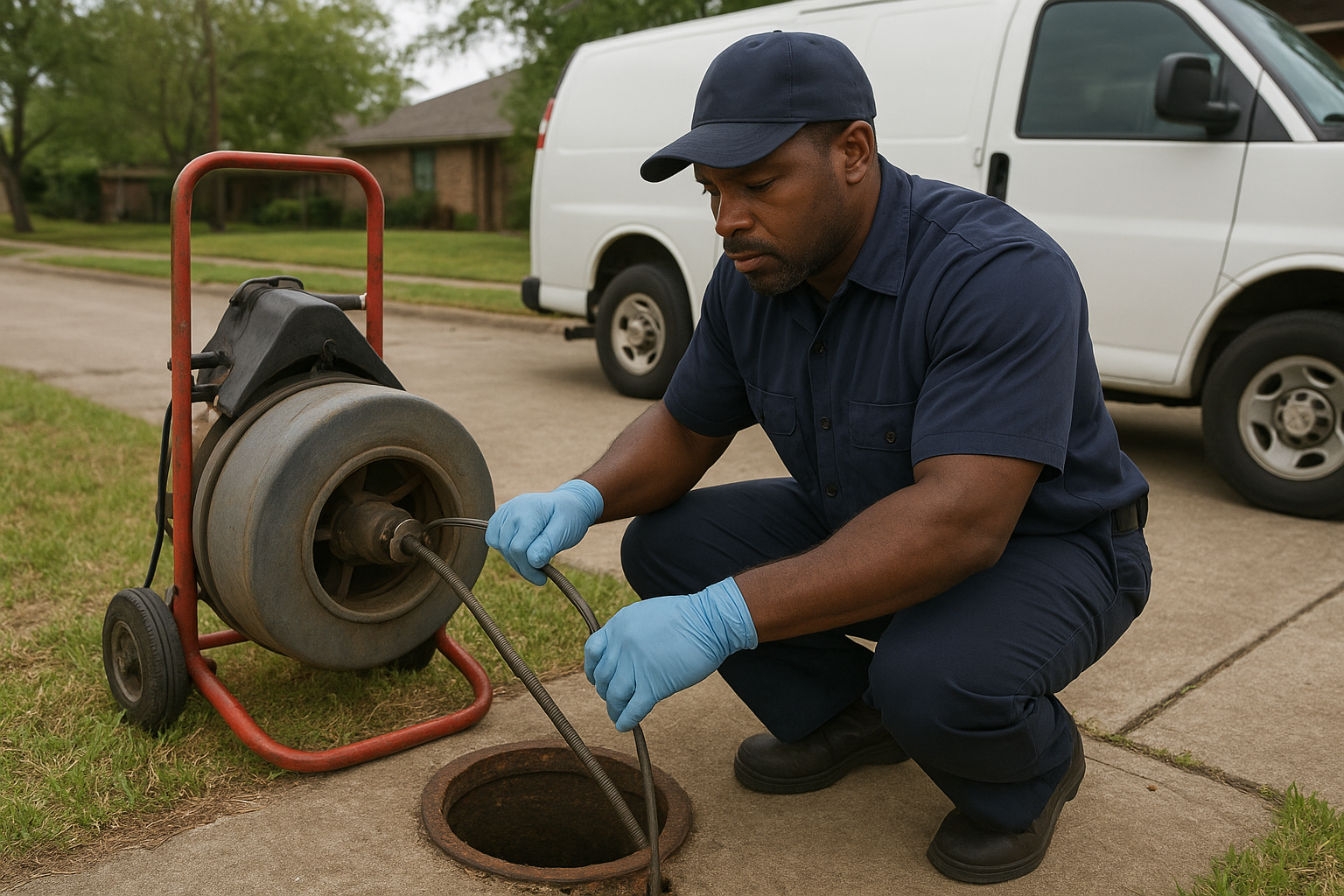
Houston's subtropical climate brings heavy rains that overwhelm older main lines in neighborhoods like the Heights and Montrose. Clay-heavy soil shifts with moisture, cracking clay or cast-iron pipes installed decades ago. Tree roots from live oaks and pecans seek the moisture and enter joints, creating recurring blockages that standard augers cannot fully remove. Homeowners in Midtown and Downtown often see backups after storms because storm drains and sewer lines share tight easements.
Camera inspection before any clearing reveals whether the line runs under driveways in River Oaks or through tight backyards in Pearland. Hydro jetting at 3,500–4,000 psi breaks grease mats common in homes near the Houston Zoo and Museum of Fine Arts where older plumbing meets modern cooking habits. In Sugar Land and Katy, newer developments still face issues when construction debris or improper slope allows sediment to settle in the main. Post-clearing, we verify flow to the street connection to prevent immediate re-clogging.
Harris County codes require proper cleanout access on main line work. When none exists we install one at ground level so future service avoids digging through landscaping. Mild winters keep roots active year-round unlike northern markets, so annual checks are common for properties near Minute Maid Park and Space Center Houston where mature trees line older streets.
Technician insight
In Houston the thing that catches most people out with main line drain cleaning is the combination of shifting clay soil and live oak roots that re-enter the same joints within two seasons, especially on 1950s–1970s homes in the Heights and Montrose where the line runs under mature trees.
Recurring backup after heavy rain in the Heights
A homeowner in the Heights reported backups only after summer storms. Camera inspection showed roots entering a cracked clay main under the driveway. We cut the roots, jetted the line to the street connection, and installed a cleanout. Flow remained clear through the next rainy season.
Main Line Drain Cleaning Services We Offer
✓Hydro Jetting Main Lines
High-pressure water jetting removes grease, scale and root intrusion from the full diameter of the main line without chemicals.
✓Camera Inspection Main Line
Locates exact blockage points, pipe damage and root entry under driveways and slabs in Montrose and Heights homes.
✓Root Cutting and Removal
Mechanical cutting heads clear tree roots common in River Oaks and Heights yards before jetting restores flow.
✓Main Line Snaking
Heavy-duty cable machines clear solid obstructions in lines running to the street in Midtown and Downtown properties.
✓Cleanout Installation
Adds accessible ground-level cleanouts required for future service on older Harris County homes lacking exterior access.
Main Line Drain Cleaning Cost in Texas
| Service | Typical Range | What Affects It |
|---|---|---|
| Standard residential main line clearing | $275–$550 | Most common in single-family homes in Montrose or Heights; length and access affect final cost. |
| Hydro jetting add-on | $150–$300 | Used when grease or heavy scale is present after initial augering. |
| Camera inspection only | $125–$225 | Diagnostic visit when the homeowner wants to confirm line condition before full service. |
| Cleanout installation | $350–$650 | Required on many pre-1970s properties; includes excavation and backfill. |
Ranges are typical for Texas and confirmed with an exact written quote before any work starts.
How it works
- 1
Site Assessment
We locate the main line cleanout or access point and review recent rainfall impact on the property in neighborhoods like the Heights.
- 2
Camera Inspection
A waterproof camera travels the line to identify roots, grease or collapsed sections before any clearing begins.
- 3
Clearing Method Selection
Hydro jetting or root cutting is chosen based on the obstruction found and pipe material common in that Houston block.
- 4
Flow Verification
Post-service camera check confirms full flow to the city connection and notes any remaining concerns for the homeowner.
Pricing
Pricing varies by line length, depth and obstruction type; upfront quotes provided after inspection.